Flat Roofs in Winter: Ponding, Snow and What to Watch For
Flat roofs are a practical choice for extensions, garages and dormers, but winter weather is tough on them. Because water doesn't run off as quickly as it does on a pitched roof, small defects can turn into leaks much faster in the colder months.
Ponding water
Puddles that sit on a flat roof for more than 48 hours are known as ponding. In winter that water can freeze, expand and stress the covering, and the extra weight puts strain on the deck underneath. Ponding usually points to a sagging deck, poor falls or a blocked outlet.
Snow load
A heavy covering of snow is surprisingly heavy, and as it melts it can find its way into any weak seam or joint. Never climb onto a snowy flat roof to clear it. If you're worried about the weight, call a professional.
Warning signs to look for
- Blisters, bubbles or cracks in the felt
- Splits along seams or around the edges
- Lifted or loose edge trims
- Moss or plant growth, which holds moisture
- Damp patches or stains on the ceiling below
Repair or replace?
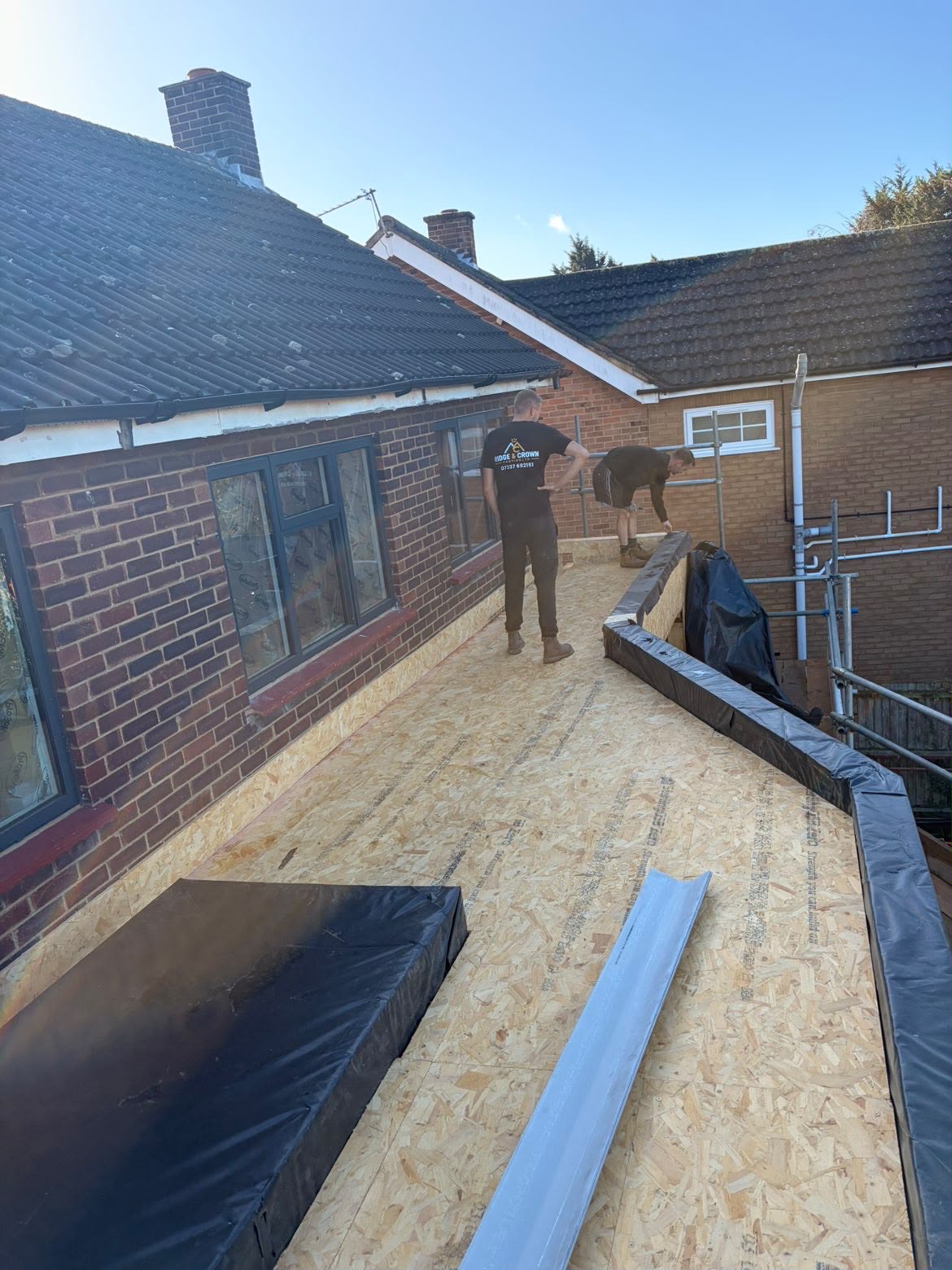
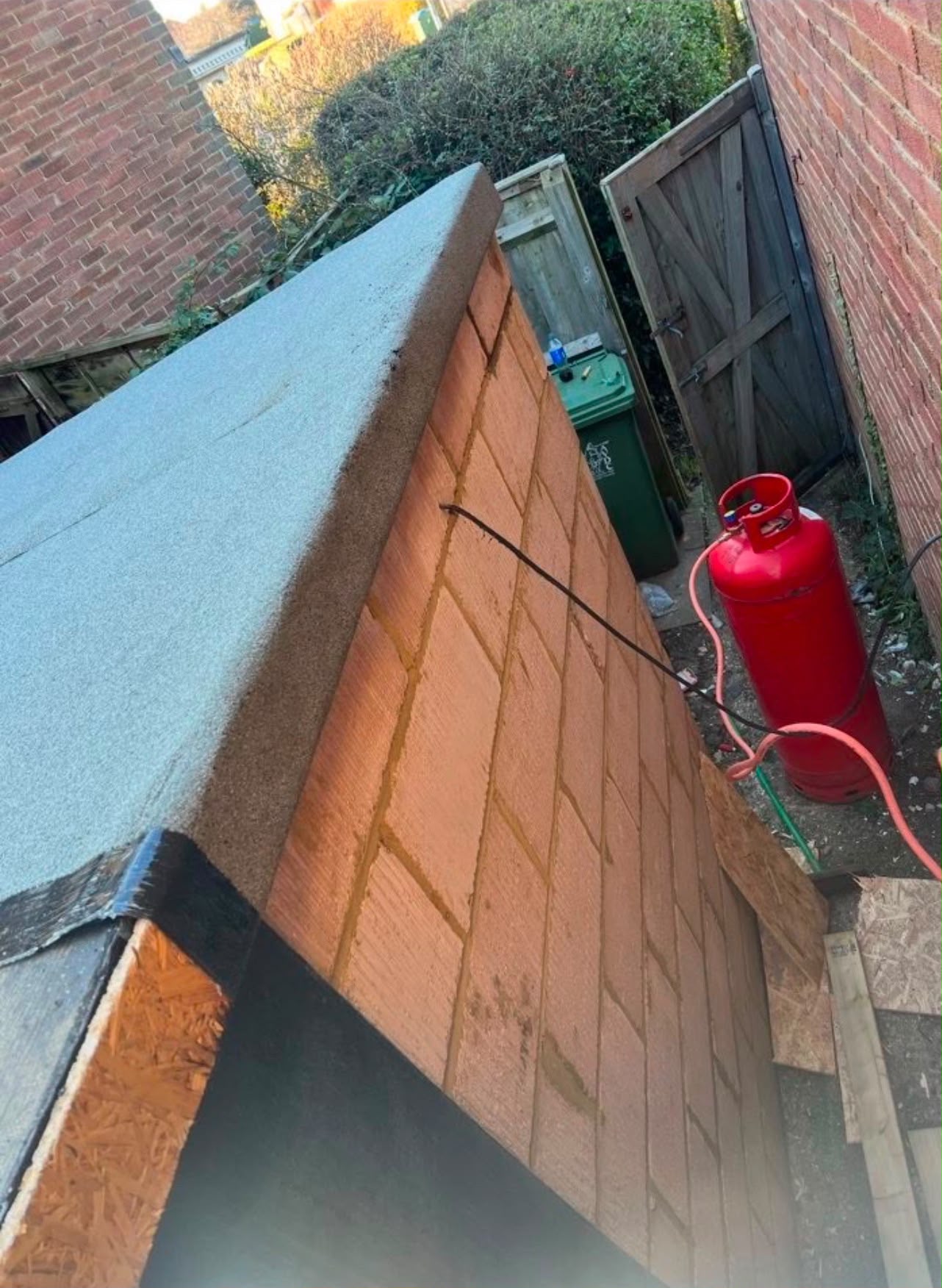
Small splits and blisters can often be repaired. But if the roof is more than 15 to 20 years old, keeps leaking in different places, or the deck feels soft underfoot, replacing it is usually better value. A new flat roof with a solid OSB deck and quality felt system will see you through many winters.
If your flat roof is showing its age, get it sorted before the worst of the weather arrives. Call 07337 682 151 for a free inspection and quote.